
There Are No/Always Words
But for better or for worse?

So already, if you’re reading this Substack newsletter, chances are that sometime in the past you encountered biblical language about the power of language: whether it was God’s “Let there be light” command in Genesis 1:3 or John’s “In the beginning was the Word, and the Word was with God, and the Word was God” pronouncement in John 1:1, words are often portrayed and appreciated as far more than just the stuff of interpersonal communication.
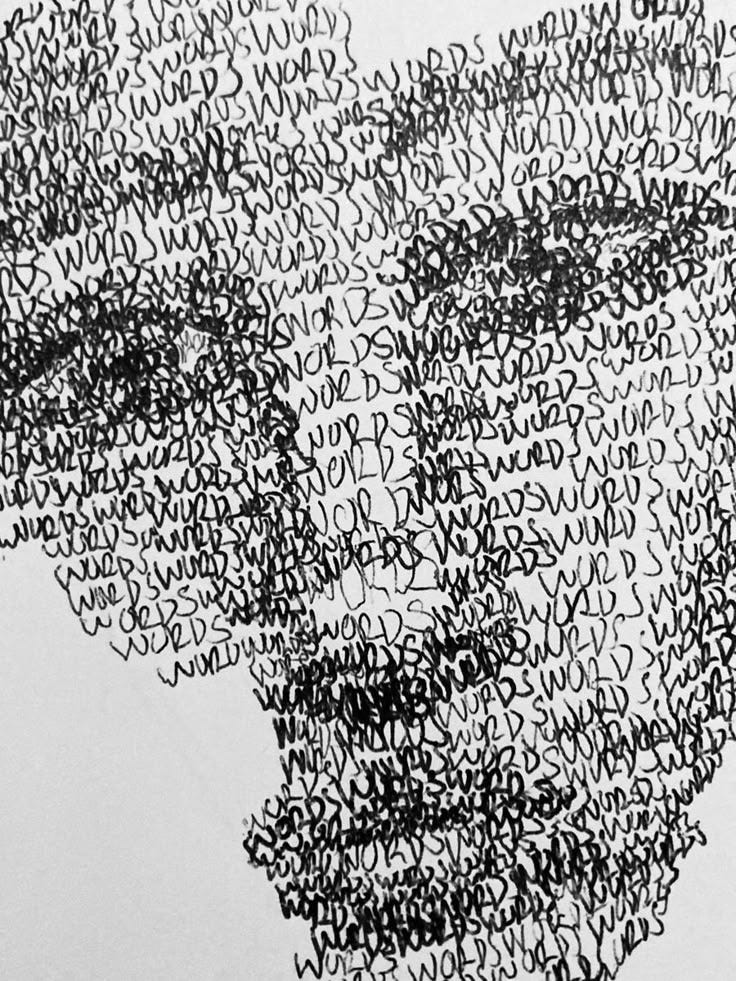
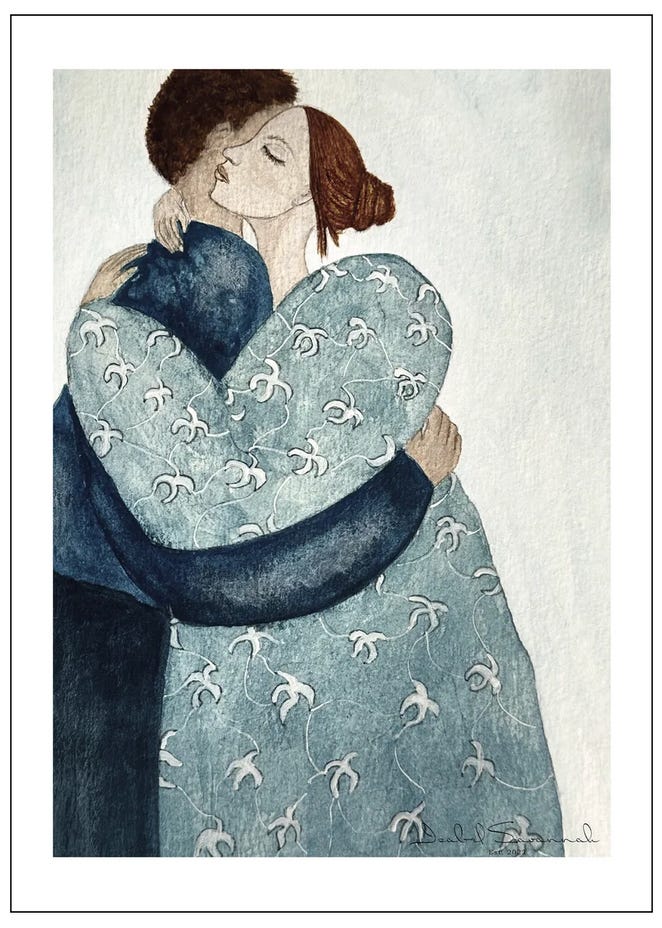
Recently, a member of one of my writing groups shared the following quotation from Naomi Shihab Nye: “It is really hard to be lonely very long in a world of words. Even if you don’t have friends somewhere, you still have language, and it will find you and wrap its little syllables around you and suddenly there will be a story to live in.”1 No doubt this is often true.
But especially in moments of tragedy and grief, people often remark, “I have no words” or “There are no words.” Is that just because the words simply haven’t found them yet, or are there sometimes no words? And are there times when this absence of words expresses and conveys the intensity of the speaker’s emotion better than words could?
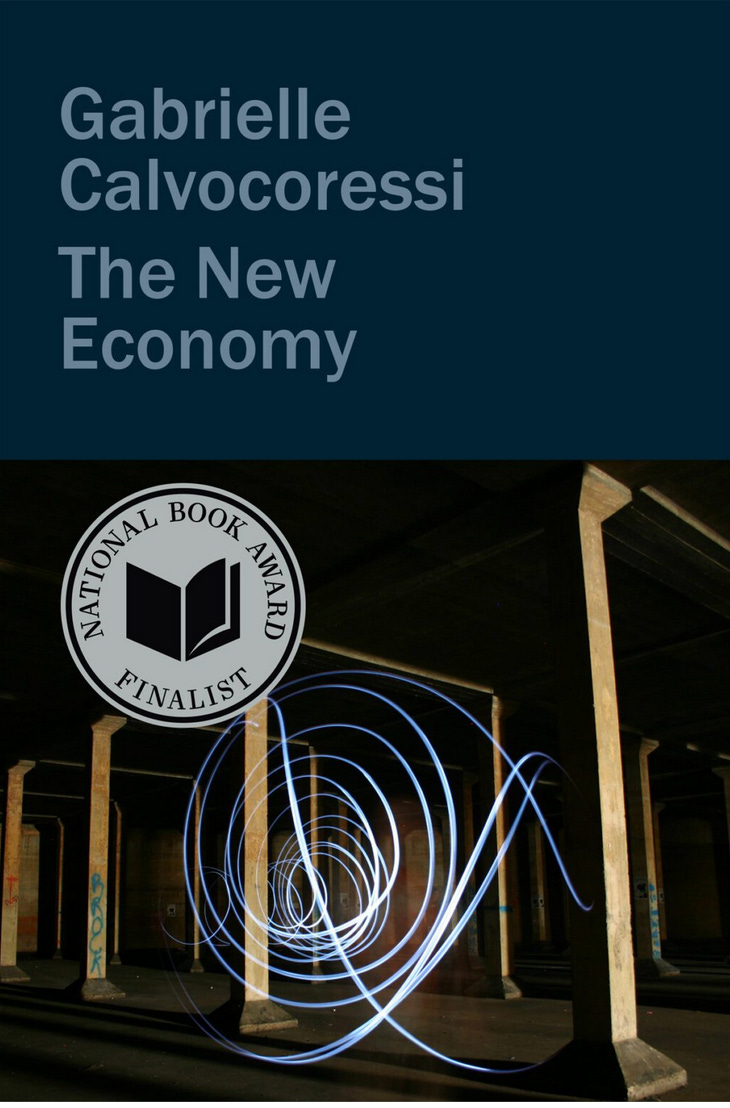
I contemplated Shihab Nye’s contention right after a member of another of my writing groups expressed curiosity about lines in some poems in The New Economy2 by Gabrielle Calvocoressi. These lines included word-length underlined blanks and blank spaces. Take, for example, this set of lines from “Light Steeples Ice,” the third poem in her Lenten poem cycle:
ruckus of those pilgrims’ bones under the city
built street by brittle street the cow path the field
the ____________ to talk about the ________
overhear the meadowlark on one’s way lots in
the marsh grass                   not making it to church (49)
In terms of its appearance in the actual book, the poem is justified, so I know the space in the last line is clearly deliberate.
These “gaps” might not have mattered so much had the speaker in “Hammond B-3 Organ Cistern,” the collection’s first poem, twice expressed disappointment, or maybe frustration, because a word or name for an important state or feeling did not exist.
The poem begins as follows:
The days I don’t want to kill myself
are extraordinary. Deep bass. All the people
in the streets waiting for their high fives
and leaping, I mean leaping
when they see me. I am the sun-filled
god of love. Or at least an optimistic
undersecretary. There should be a word for it. (3)
And the poem ends in this way:
Every day I wake up with my good fortune
and news of my demise. Don’t keep it from me.
Why don’t we have a name for it?
Bring the bass back. Bring the band out on the stoop.
Hallelujah. (3-4)
These last lines suggest that the shadow and temptation of death and the gratitude associated with “my good fortune” are inseparable though generally thought of as mutually exclusive. Do we concur? And if so, would we want to join Calvocoressi in yearning for a name for this somewhat paradoxical reality? Do we always want to have names of things if having those names might pin down what we’d rather not know or feel?
The question of names brings me back to that Sunday afternoon in 2013 when the faculty and administration of Cambridge Rindge and Latin School sat in the school cafeteria preparing for school’s opening the next day—just three days after Dzhokhar Tsarnaev had been identified as a probable perpetrator of the Boston Marathon bombings. During the discussion, many of those present referred to Tsarnaev, who’d graduated from CRLS just a couple of years back, as “the suspect”—until a young social studies teacher raised his hand and asked why we weren’t calling him Dzhokhar—or Jahar, as he was commonly called (which raises the question of the effect of the routine mispronunciation of one’s name by so many people in one’s life). We were educators, not lawyers or police officers; protocol did not require us to use language to protect his assumed innocence. The young teacher urged us to consider the meaning of our language choices: were we trying to distance ourselves from “one of our own”? And if so, to what effect?
How much power does language have, and is powerful language always our friend? As I listen to press conference after press conference about Operation Epic Fury—which two evenings ago, President Trump spoke of as an “excursion” though it has already claimed American and
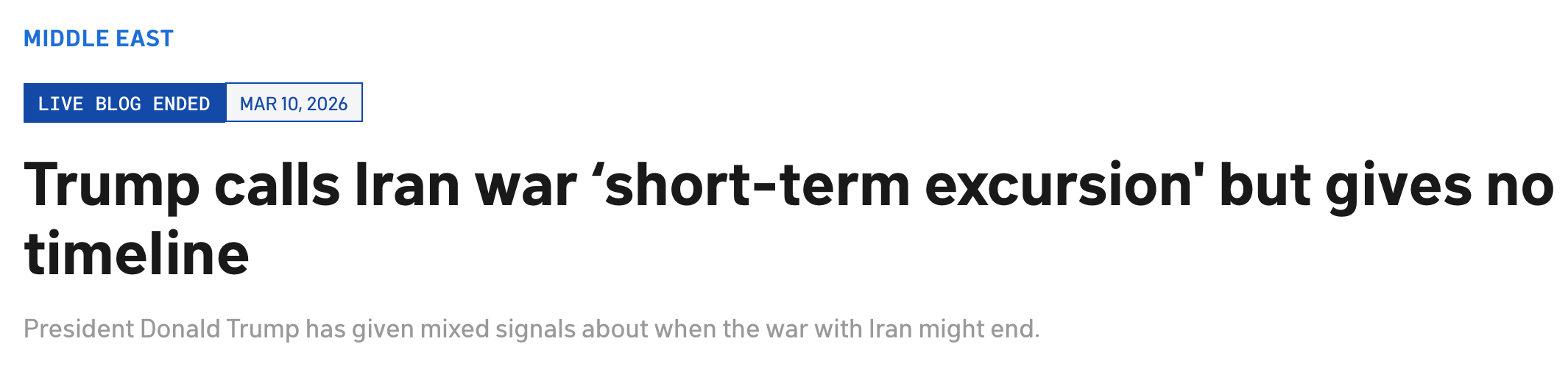
other lives—I am both dismayed by the emptiness of much emphatic language and terrified by its power. I also keep wondering what Trump understands about epics, and which ones he’s read.
No doubt, the worst kind of words are the empty but powerful ones. I might not have phrased it that way had I not recently read a chapter in Delphine Horvilleur’s Living with Our Dead3 in which she explores the connections among conversational Hebrew, the demise of an important romantic relationship, and the assassination of Yitzhak Rabin.
Early in the chapter Horvilleur describes the narrowing of the range of language she shares with her then boyfriend. Initially, “English provided neutral terrain. It was the Switzerland of our first exchanges” (124). Even at the beginning of their third year together, French words mixed in with the Hebrew that dominated their conversation. But by later that same year, “Hebrew had won out over our amorous Tower of Babel” (125), limiting their ability to communicate about their differences in nuanced ways. Mistakenly they contended that this linguistic narrowing had “purified our conversation” (125), when in reality, it had aided and abetted, even hidden, the emotional and intellectual disconnection developing between them.
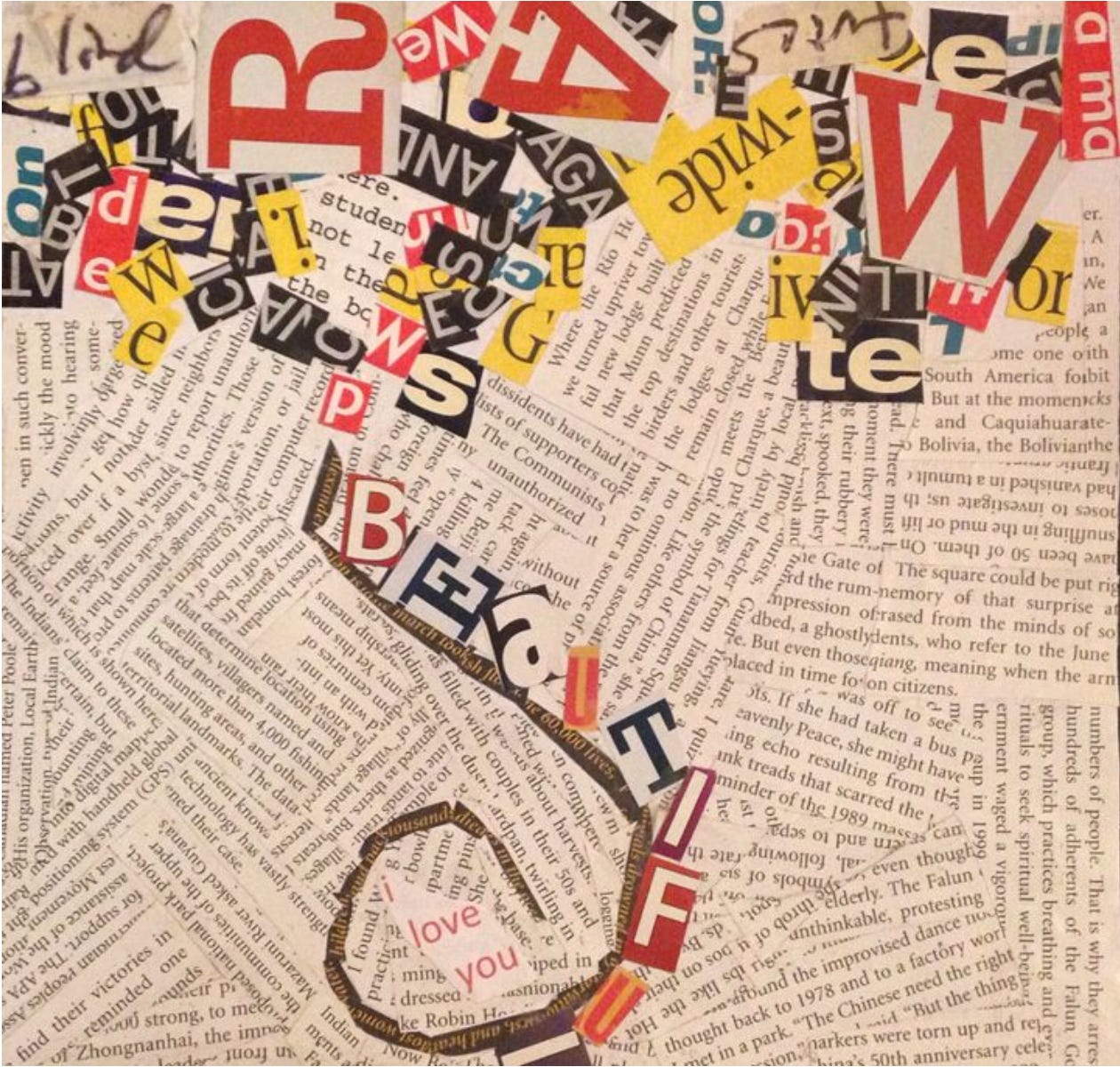
Later in the chapter, Horvilleur recounts how in the aftermath the assassination of Yitzhak Rabin, she realizes that her “Zionist and amorous confusions were one and the same” and explains the role of language—particularly modern Hebrew—in both generating and eliminating her confusion.
At this point, it’s important to remember that Horvilleur is both a rabbi and the member of a Jewish family with deep roots in the Alsace-Lorraine region of France—so no stranger to religious, national, and familial histories of exile and persecution, and to the Hebrew found in sacred and traditional texts.
Modern Hebrew, she explains, in contrast to “old” Hebrew, “remains a terrain occupied by the foreign realms that haunt it,” as proven by its “many words that come from a foreign root, grafts from origins so distant that they have forgotten they are drawn from elsewhere” (125). But since many of modern Hebrew’s other words are drawn from traditional Jewish texts, Horvilleur recognizes that in the mouths of Zionists like her boyfriend, modern Hebrew represents “an inheritance at once mystical and secular” (128).
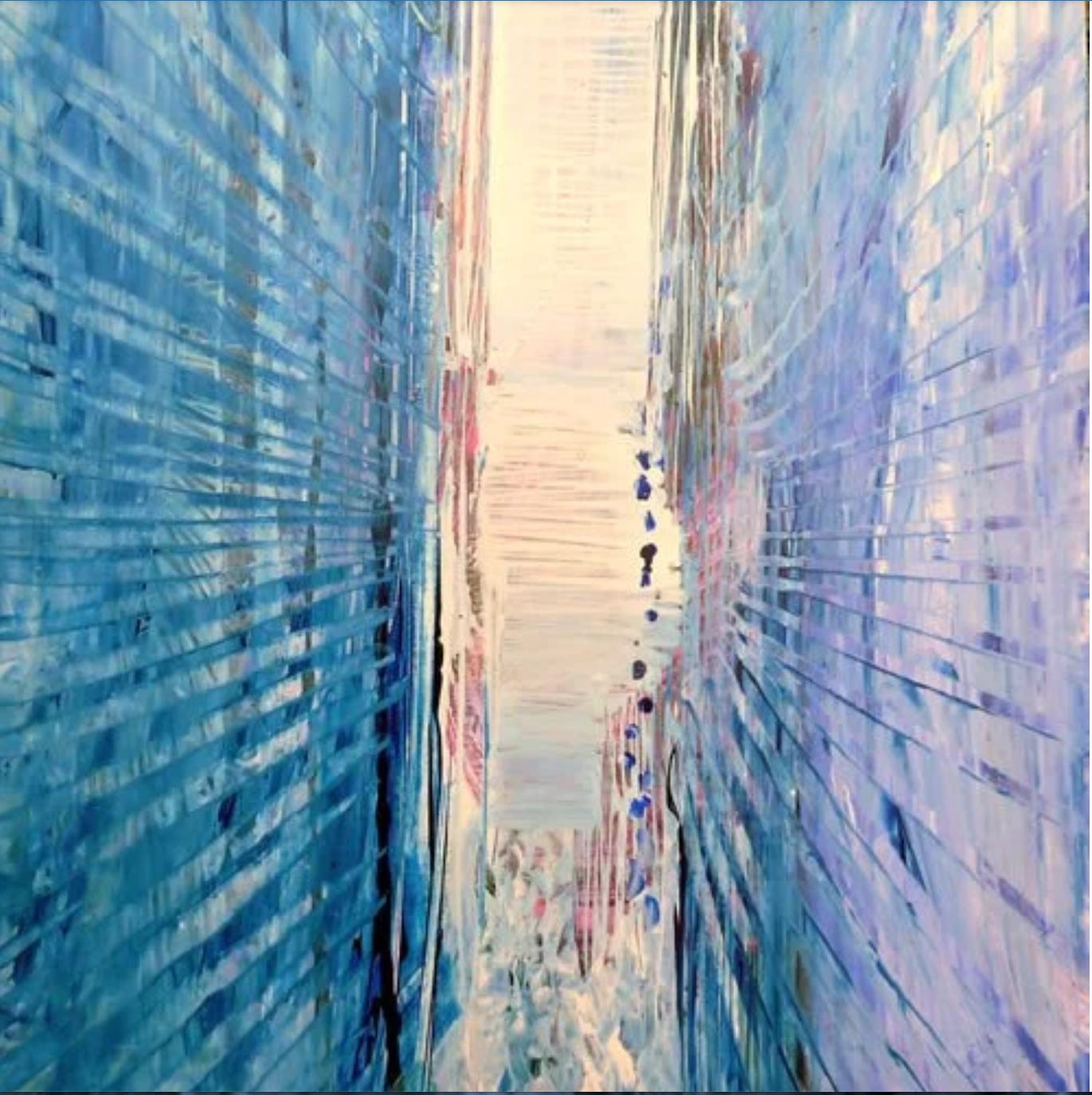
Horvilleur believes that the power of that sacred language was not “neutralized” by the efforts of some Zionists to secularize it; in fact, citing language’s galvanizing role4 in Creation, she is more inclined to believe that its power can never be neutralized. An influence on her belief, and her fears associated with it, is a letter Gershom Scholem, “an avant -garde Zionist and renowned scholar of Jewish mysticism” (129) sent to Franz Rosenzweig, a German Jewish philosopher and religious thinker, in 1926:
Is not this sacred language, with which we nourish our children, in fact an abyss that can’t fail to open up one day? . . . if we, the transitional generation, revive the language of the old texts so that they once more reveal their meaning, don’t we risk the possibility of seeing, one day, the religious power of this language turning violently against those who speak it? (129)
Scholem’s and Horvilleur’s fears remind me of Oppenheimer’s quoting from the Bhagavad Gita after the first test of the atomic bomb: ““Now I am become Death, the destroyer of worlds”; and also of Langston Hughes’ poem “Harlem,” which tempts me to paraphrase its first line: “What happens to powerful language ignored or deferred?”
Needless to say, many would dismiss both Horvilleur’s analysis, and the fears she shares with Scholem about the power of language unleashed. But when language is so often the common currency within and even across groups, dare we disregard it when it dismays or suits us? Mustn’t we grapple with its consequences when it gets something disturbing right—or exaggerates, minimizes, obfuscates, conceals, and incites in ways that kill?
There are times that there are no words—and sometimes, that’s the way we want it. There are times that there are words, even just the right ones to rescue us or set us straight. And there are words, often many of them, sometimes used dangerously by one person or many in multiple ways, even on the same day. These are the words I’m worrying about most right now. Even as I write this, may other words be forming that will galvanize our individual and collective action, and in so doing set our country and the world on a life-affirming course.
According to Goodreads, from Naomi Shihab Nye’s I'll Ask You Three Times, Are You OK?: Tales of Driving and Being Driven – A Traveling Poet's Funny and Moving Young Adult Stories
Calvocoressi, G. (2025). The new economy. Copper Canyon Press.
Horvilleur, D. (2024). Israel: Blessed is he who revives the dead. Living with our dead: On loss and consolation (L. Appignanesi, Trans.). Europa Editions. (Original work published 2021)
Yoram Raanan’s painting on the Chabad website: https://www.chabad.org/parshah/article_cdo/aid/3475832/jewish/Let-There-Be-Light.htm